Seabury School challenges gifted children in a community that cherishes each individual and fosters a love of learning, discovery and creativity.


Friday, September 12, 2014

Welcome New Bumblebees!!

Welcome to the Bumblebees!  We have gotten off to a terrific start, anxious to "discover" the world around us.  Over the past two weeks, I have been assessing each child's reading, math and writing skills and developing plans and forming groups to better deliver the instruction they need at the appropriate level. This week we also added a new assistant to our class, Ms. Katy.  She has many years experience with young kids, and has already been amazed at the things the Bumblebees say and do. The kids are also very comfortable with her.

Below are some snapshots of what we are doing.  Currently it looks a lot like play, and those opportunities give students chances to form friendships and I get an chance to informally assess their critical thinking skills, vocabulary and problem solving.


The Bumblebees minus 1 (will retake when we are all here!)


Wednesday, May 28, 2014

Crackin' Geodes

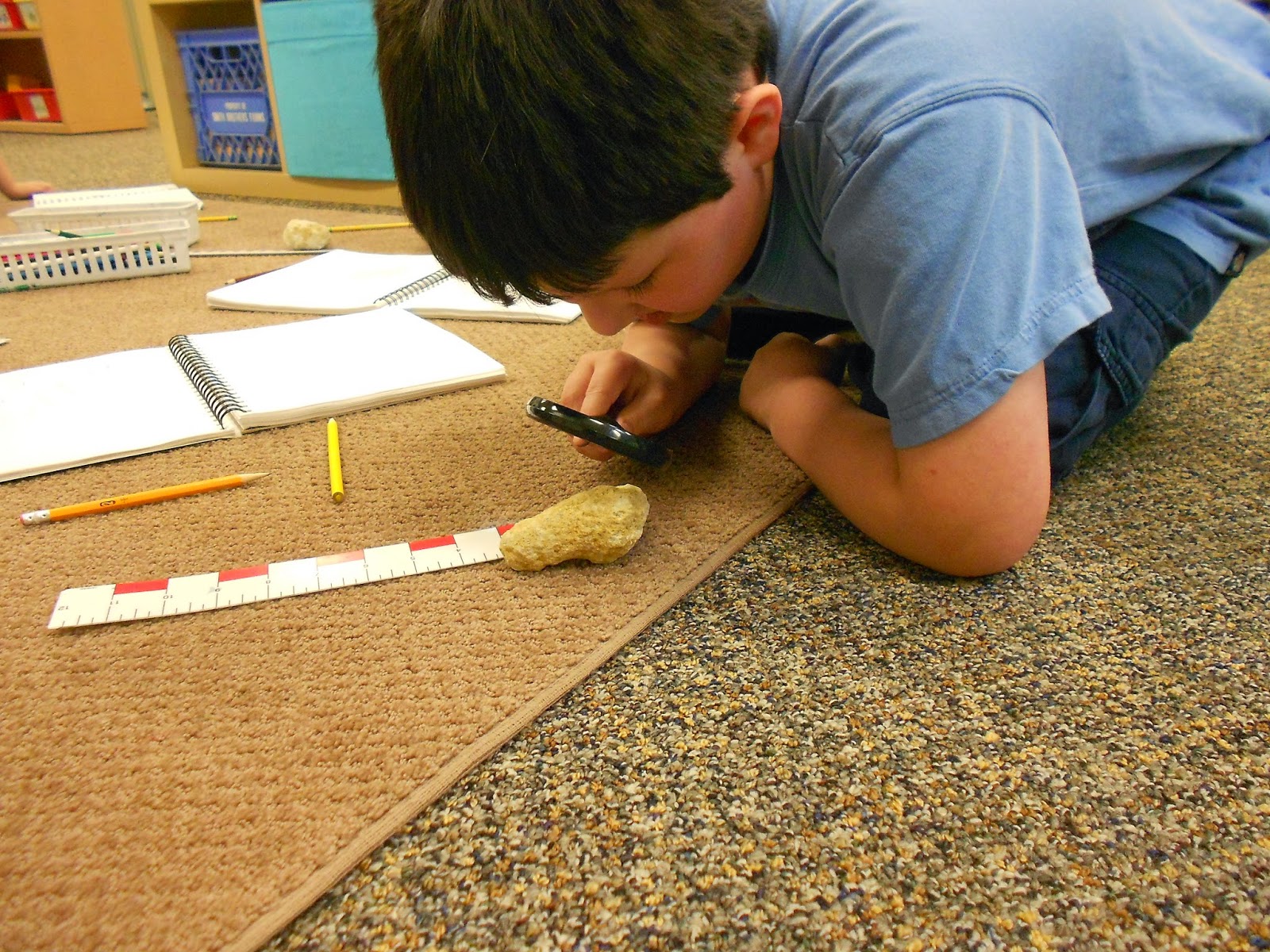
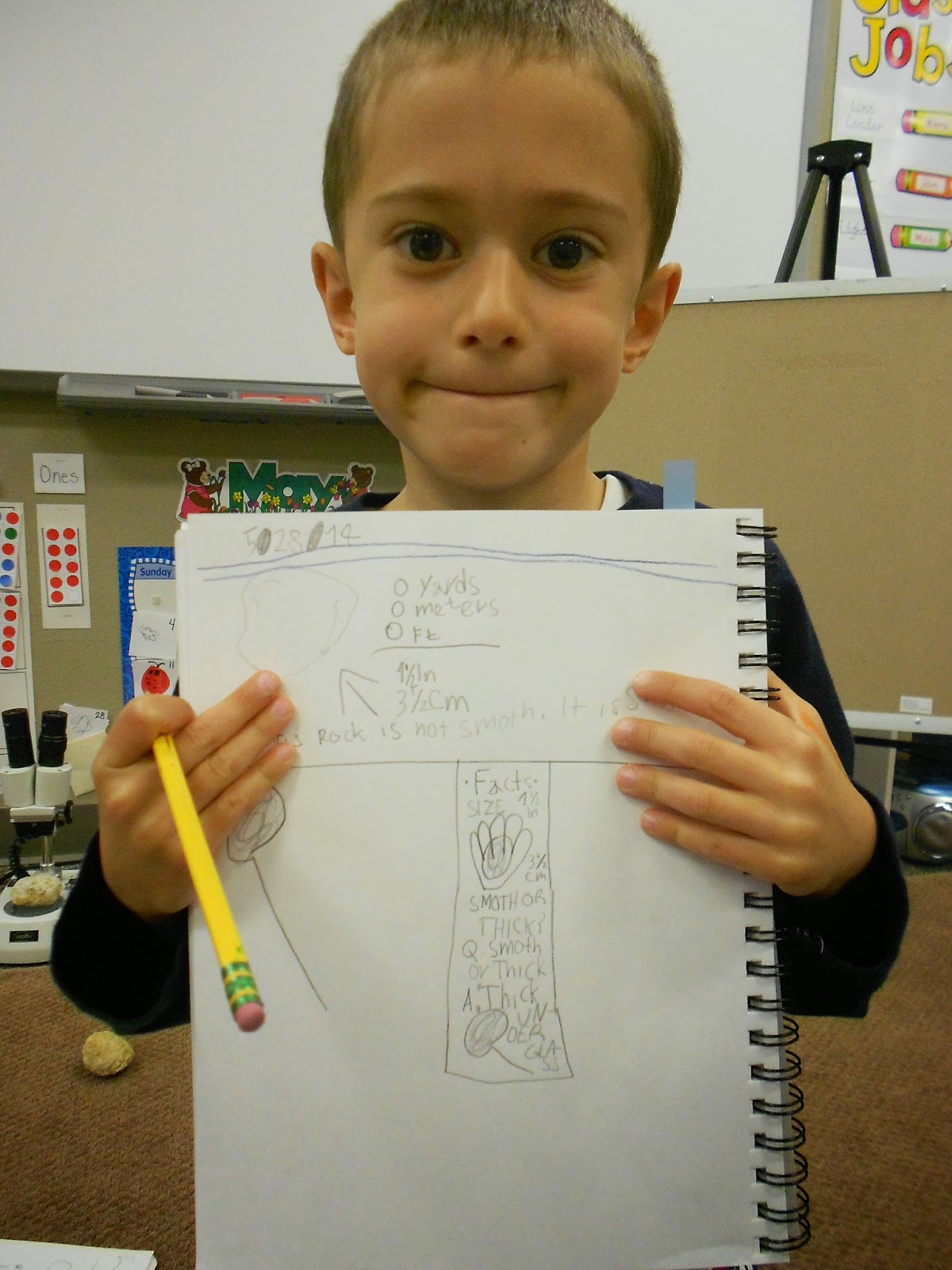
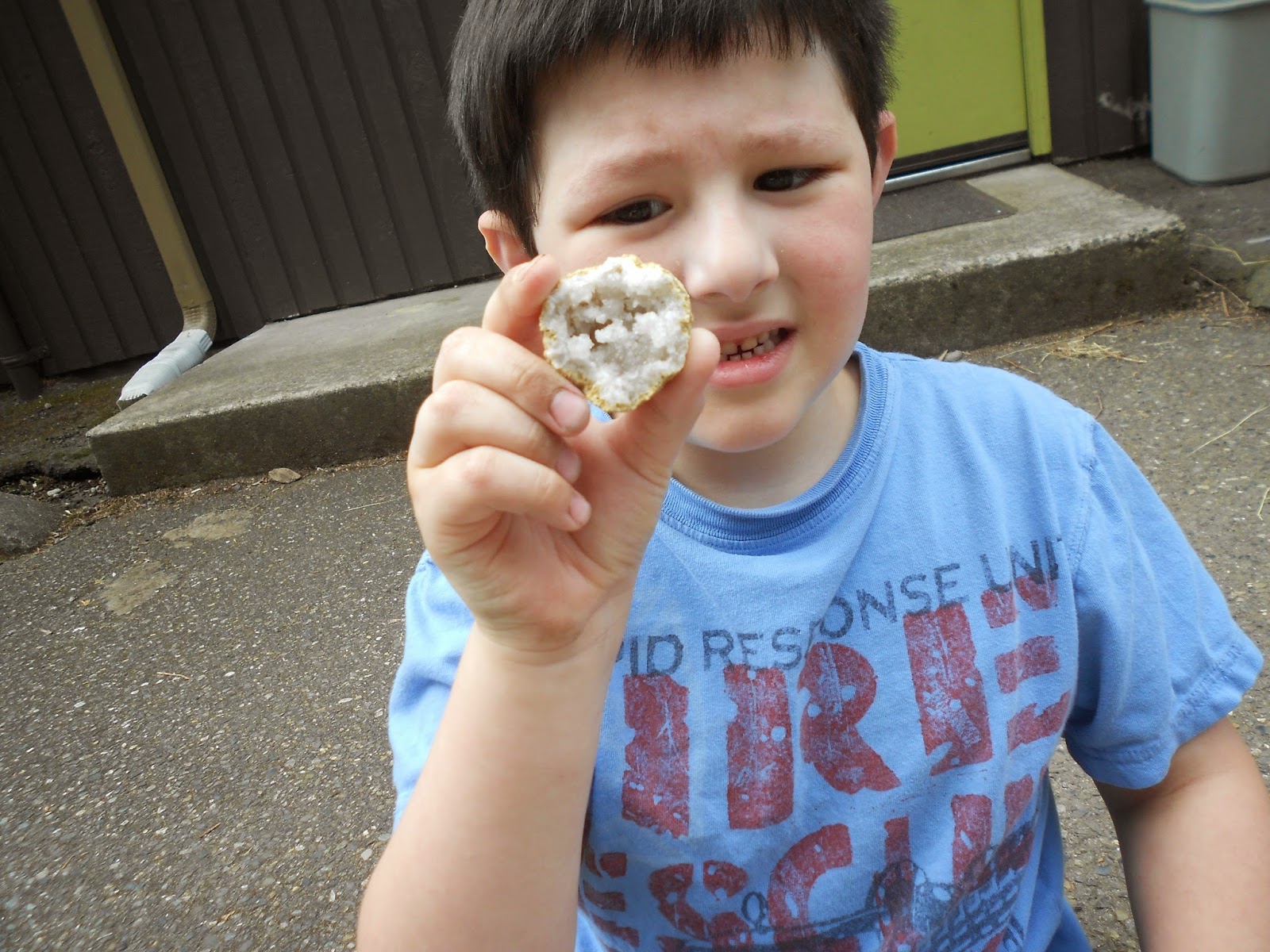
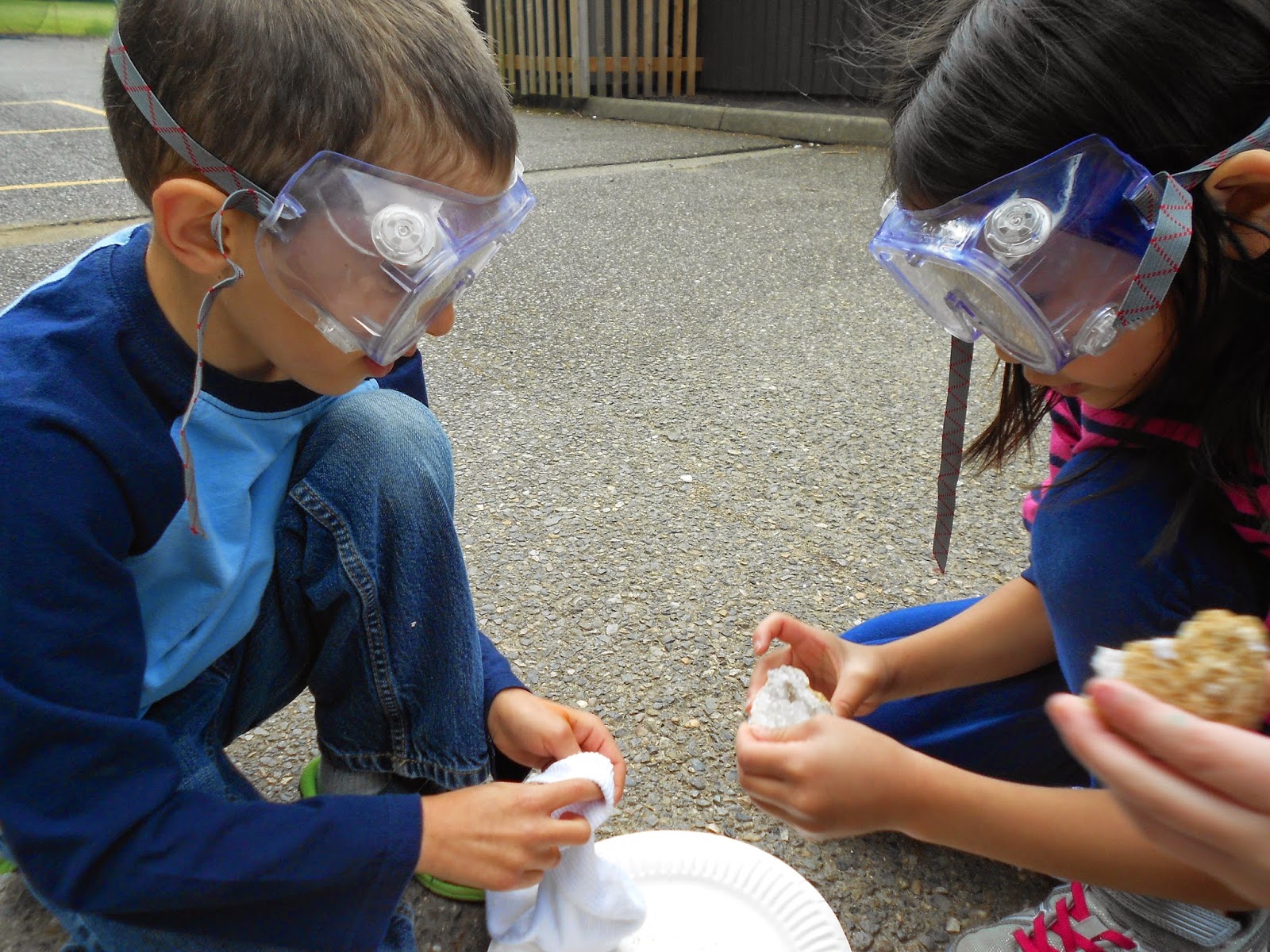
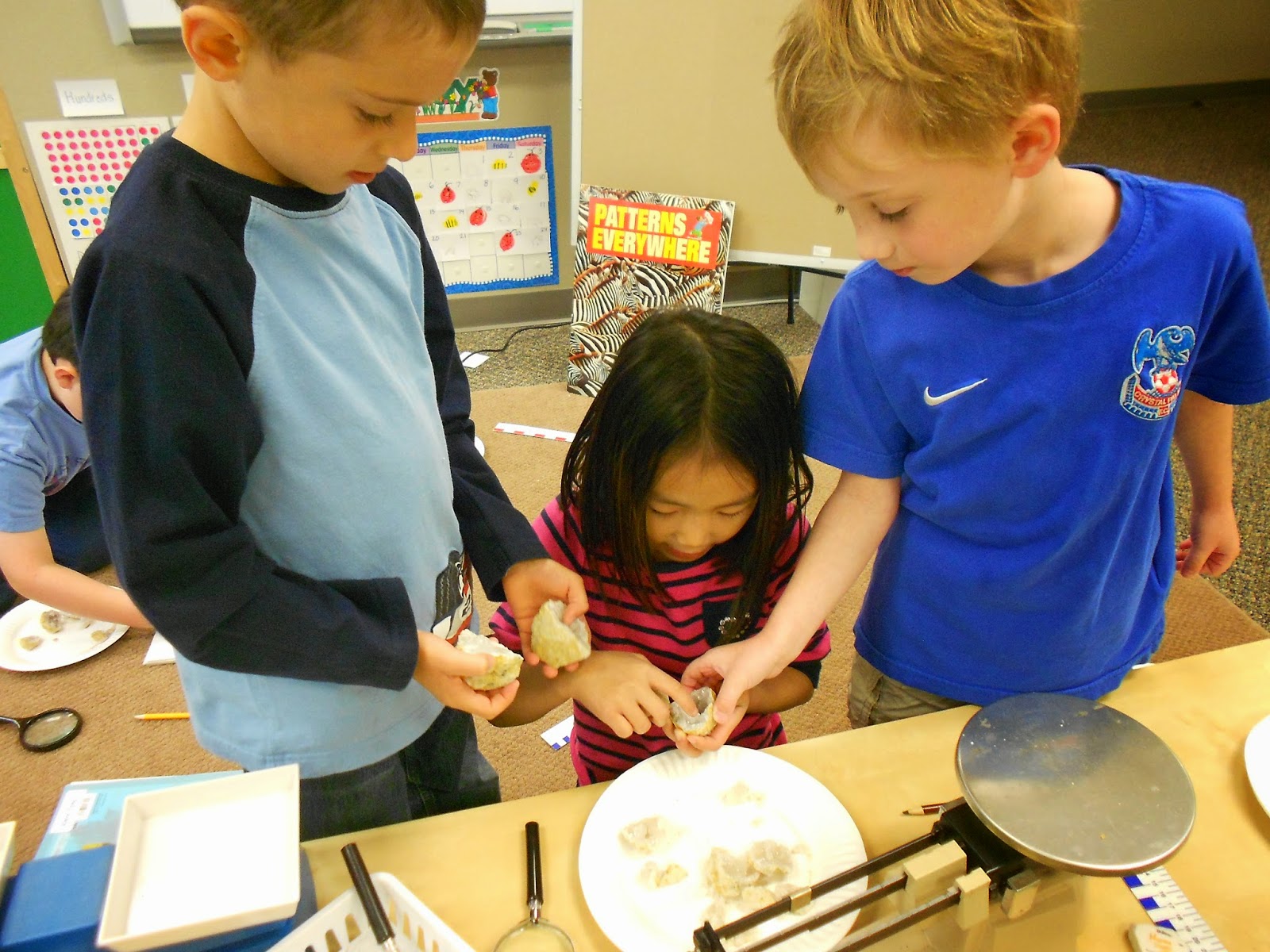
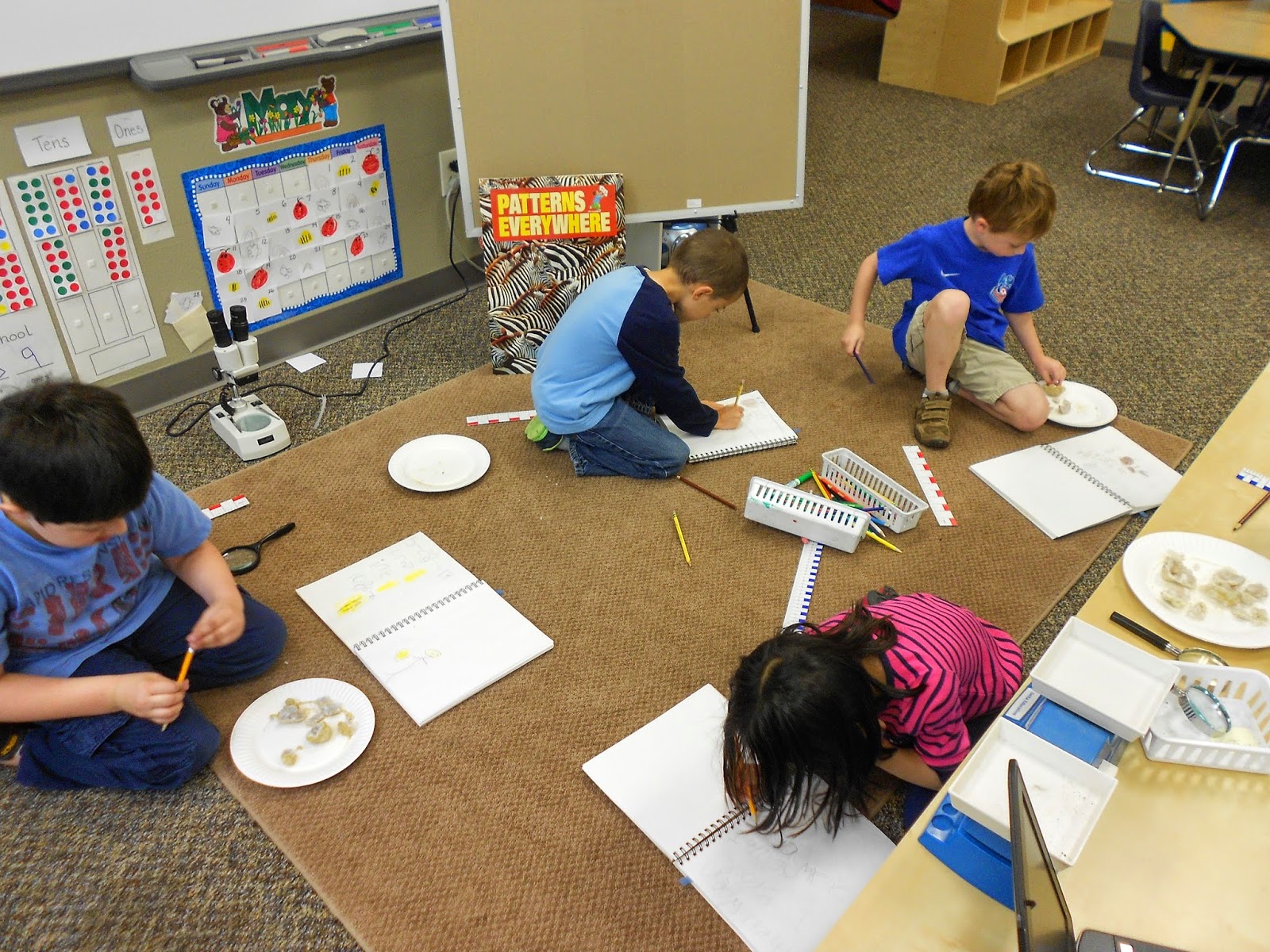
Today I gave the Bumblebees a geode that we bought from Jerry's Rock and Gem last week.  They were so excited!!! First, in our science journals I had them measure, weigh, draw and describe their rock.  They were very inquisitive, asking questions like, "How did the crystals form?, Why is there black spots on mine?, Do they come in different colors?"  In the scientific method we were asking questions, forming hypothesis, collecting data and observing with pictures and words. Afterwards, I gave each kid a hammer (and safety goggles and a safety speech) and we hammered away. After a few whacks the geodes opened and they compared the insides.  They noticed that some had bigger crystals and some were different shades. We concluded (with help from Google) that geodes are formed from gas bubbles when igneous (volcanic) rocks cooled.  The slower the cooling, the bigger the crystals.  Check their backpacks for their geode crystals.

measuring with inches and centimeters

making observations and recording data in science journals

KF has broken apart the geode

look what is inside

comparing geodes

more comparing

science at work

Thursday, May 15, 2014

Fraction Fun

Over the past few weeks I have introduced the concept of fractions.  We played games with pizza slices, used pattern blocks and Cuisenaire rods, and even created art from fractional circle pieces.  I was very impressed with how quickly the Bumblebees caught on; being able to identify and recreate fractional parts of a whole. Below are just a couple of the activities we have done.
We used lots of fraction circles and pattern blocks to understand how parts of a whole together

We cut out fractions, learning that each piece doubled.


We can put different parts together to create a whole (intro to equivalent fractions)

We counted our shoes to see how to use fractions with a group of objects

The next three pictures were created with parts of a fraction circle


Friday, April 18, 2014

Hamburger Analogy of Writing

These are facts about the Saguaro Cactus. In the fruit there is 2000 seeds. Its lives for 200 years. It grows flowers, then it grows fruit. It grows in the Arizona desert. The Saguaro Cactus is the largest cactus.
The Saguaro Cactus lives in the desert. It has ribs. The Saguaro Cactus lives 200 years. (to be finished.)
This model helps demonstrate how we create a topic sentence, embellish with details, then come to a conclusion when writing for information.

 
Today's writing lesson was focused around organizing our thoughts when writing an expository (informational) piece. I use the "hamburger" model to show how it goes together.  The buns represent the topic and conclusion.  You need a bun to start your burger and a bottom bun holds it all in.  Inside are the toppings--or great details, facts and explanations about your topic sentence.  The more toppings, the more delicious (or enriching) the writing will be.  We wrote an informational piece about the Sagauro Cactus, the largest cacti in the world.  We gathered information from the book, "Cactus Hotel," and prewrote out our facts. Then, I gave the students different colored sheets of paper to represent the layers of the burger to complete their paragraph. 
 
The Saguaro Cactus is giant! It lives for 200 years. It lives in Arizona. It has flowers. The Saguaro Cactus is the largest cactus.

Saguaro Cactus is one type of cactus. Animals eat the flowers. It is huge!! It is a home to animals. There are facts about the Saguaro cactus.


Friday, April 11, 2014

Spring has Sprung!

I reflect back on these past 6 months, and think about how each Bumblebee started the year.  I have observed so much growth, both academically and socially!  This week the Bumblebees were so proud to have their own published book! We have shared them at Gathering, and they get to read them in the Author's Chair in the Library today. We have also started to study nature around us, using inquiry to guide our study. On Wednesday, I gave the group a box of seeds and had the explore them with the microscopes.  Great questions came up, especially around the idea of why some seeds have umbrellas (dandelions), many are smooth, (beans, pumpkins), and while others "feel velcroy." I asked today what will be the first thing that happens to a planted seed.  We have mixed hypotheses whether the stem or root will come out first. In addition, we are keeping lots of observable and measurable data, and will be introducing the concept of control and variable in later experiments.


Wednesday, March 26, 2014

Science Fair and Fun with Literature

We had a GREAT science fair last week!  It was so nice to see all the kids excited, inviting parents and others to see their projects, and for the Bumblebee parents to get together too! One bumblebee student took his project to the South Sound Regional Science Fair at PLU and won second place for his age division!  The best part of the science fair this year was really listening to the students share their project.  For the early grades, it's not that important to be an elaborate, unique project. I want to see something that they could confidently tell me what they wanted to find out (question), what they thought might happen (hypothesis) and explain what did happen (data and conclusion). This language and process of learning is used all the time in the real world! We are giving them the skills at 5 and 6 years old to be amazing problem solvers, and to realize that learning doesn't stop because you left the classroom, or even graduated school!


In addition, we have been having fun with literature!  We have been reading Pete the Cat, Elephant and Piggie and Elmer.  We created magic sunglasses to make our moods better, wrote our own comics with speech bubbles, and think about what makes each of us "one of a kind." Today we read "The Wind Blew" by Pat Hutchins, and designed our own kites (now only if the wind would come on a day I wanted it to we could fly them :) ).
 
"Our cool, magic sunglasses help us see things in a whole new way!"


Wednesday, March 19, 2014

Rock Science

Over the past few weeks, I have allowed the Bumblebees to guide the next topic.  Based on a ring on my finger, there was much discussion about the type of gem it was.  This sparked an interest in rocks in general.  The students have been bringing their own rocks from home to share, and we have been observing and discovering the different rock types (igneous, sedimentary and metamorphic) and how they are formed. During these observations we are taking notes, measuring and weighing, comparing and contrasting, and finding all sorts of surprises! We use scales, magnifying glasses and microscopes to collect all the information we can and document that in our journals. We even made our own pet rocks, which has sparked some very creative story writing with our new friends!